
Multimeters: price comparison
6 Energy meters from established makers · Selection index 100.0 ±0.0% 7 d · avg €24 · as of 18/10/2026
Price table · 6 Energy meters
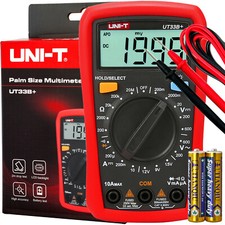 UNI·UT33BUnit UT33B+ Digital Multimeter Strommessgerät AC/DC batterie€18±0.0%
 UNI·UT33DUnit UT33D+ Digital Multimeter Strommessgerät AC/DC Ampere€18±0.0%
 UNI·UNIUNI-T UT33C+ Digital Multimeter Strommessgerät AC/DC Ampere€22±0.0%
 PEA·DIGITALPeakTech P 1071 – Digital Multimeter, Strommessgerät€23±0.0%
 PEA·DIGITALPeakTech P 1073 – Digital Multimeter, Strommessgerät€30±0.0%
 UNI·UT89XUT89X UNI-T Digital Multimeter Strommessgerät AC/DC A V Ω HZ€33±0.0%
- UNI·UT33BUnit UT33B+ Digital Multimeter Strommessgerät AC/DC batterie OHM A VMultimeter€18±0.0%±0.0%±0.0%22 d
- UNI·UT33DUnit UT33D+ Digital Multimeter Strommessgerät AC/DC Ampere Volt OhmMultimeter€18±0.0%±0.0%±0.0%24 d
- UNI·UNIUNI-T UT33C+ Digital Multimeter Strommessgerät AC/DC Ampere Volt OhmMultimeter€22±0.0%±0.0%±0.0%9 d
- PEA·DIGITALPeakTech P 1071 – Digital Multimeter, Strommessgerät, SpannungsprüferMultimeter€23±0.0%––
- PEA·DIGITALPeakTech P 1073 – Digital Multimeter, Strommessgerät, SpannungsprüferMultimeter€30±0.0%±0.0%±0.0%7 d
- UNI·UT89XUT89X UNI-T Digital Multimeter Strommessgerät AC/DC A V Ω HZ NCV LIVEMultimeter€33±0.0%±0.0%±0.0%24 d
Voltage, current, resistance, continuity: a digital multimeter is the all-round tool for electronics, cars and DIY – if you choose the right model.
Measurement category: the most important safety feature
The measurement category (CAT) under the IEC/EN 61010 series of standards indicates the environment in which a multimeter may be used safely. CAT II covers measurements on equipment connected via a plug, CAT III the fixed building installation such as distribution boards and socket circuits, and CAT IV the service connection. Together with the voltage rating (for example CAT III 600 V), it describes how well the device is protected against voltage spikes.
Very cheap multimeters often carry impressive markings but are not always tested to these standards. For batteries, a car's electrical system and electronics tinkering, that's of secondary importance. If you measure on 230 V circuits, look for a device with a credible CAT III rating, fused current ranges and good test leads.
Features that make the difference
Which features you need depends on what you want to measure:
- True RMS: measures AC values correctly even with distorted waveforms, for example behind dimmers, power supplies or frequency inverters.
- Auto-range: selects the measuring range automatically – convenient for beginners.
- Counts (e.g. 4000 or 6000): higher resolution and more decimal places.
- NCV: non-contact voltage detection as a quick preliminary check.
- Capacitance, frequency, temperature and diode test: useful for electronics and HVAC work.
- Backlit display and hold function: make measuring in a cabinet or engine bay easier.
The right multimeter for your purpose
For occasional measurements on batteries, power supplies and in the car, a simple device with continuity tester and auto-range is enough. For electronics and off-grid solar systems, True RMS, higher resolution and DC current measurement up to 10 A are worthwhile. If you work on domestic installations professionally, choose branded devices with verifiable safety certification.
Important: a multimeter is no substitute for a two-pole voltage tester when you need to verify that a circuit is dead before working on the electrical installation. That kind of work belongs in the hands of a qualified electrician anyway.
Test leads and accessories
Good test leads with finger guards, a matching CAT rating and shrouded probe tips are just as important as the device itself. Check them for damage before every measurement. Crocodile clips, temperature probes and a carrying case make everyday work in the workshop and car easier.