
Guide
Finding power hogs with a monitoring plug
With a plug-in energy meter or a smart plug you can find out within a few days which appliances drive up your electricity bill – and where saving really pays off.
Updated 7 min readEditorial team wostrom.de
Why measuring beats estimating
Rating plates and energy labels state nominal values or standardised consumption figures that may have little to do with your everyday life. A ten-year-old fridge with porous seals, a TV with quick start enabled or a router with several connected devices often consume differently than you think. Only a measurement shows what actually flows through the cable.
The good news: you don't need expert knowledge and hardly any money. A simple plug-in energy meter or a smart plug with energy monitoring is enough. With a little system, after one or two weeks you'll have a good overview of the main consumers in your household.
Choosing the right meter
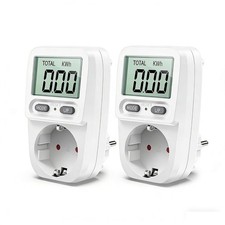
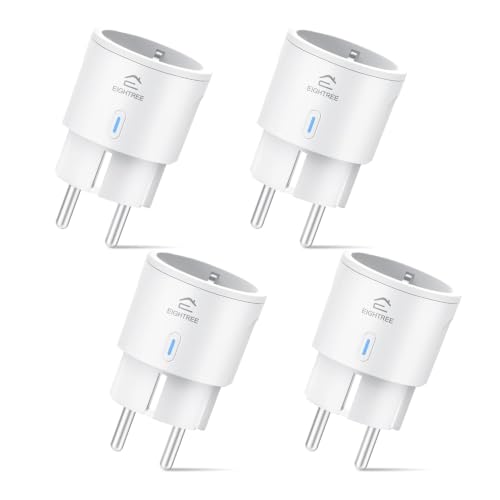
There are two types of device for hunting power hogs. The classic plug-in energy meter has a display, shows watts, kilowatt hours and costs and works without an app. It's ideal if you want to check many appliances briefly one after the other. A smart plug with energy monitoring sends the values to an app and records history. That's particularly handy for appliances that run irregularly, such as the fridge, chest freezer or hot water boiler.
With both, look for good resolution at low power, because standby is often about values of just a few watts. And check the maximum load: most devices handle up to 16 A or 3,680 W, which is enough for all plug-in household appliances.
Plug-in energy meters for the socket
Ad All products linked with "View offer" are commission (affiliate) links: if you buy through them, we earn a commission – the price stays the same for you. As an Amazon Associate and eBay Partner Network affiliate we earn from qualifying purchases. Learn more
 Ad
Ad Ad
AdWattmeter Energieverbrauch Energiekosten Messgerät Stromzähler Typ E …
 Ad
AdNOVKIT Stromzähler Steckdose Energiekostenmessgerät 3680W Speicherfunktion
 Ad
Ad2 Stück Energiekosten Messgerät Stromzähler Energie Strommesser Für …
Step 1: Determine the base load
Before you measure individual appliances, it's worth looking at the base load – the consumption that occurs around the clock. To do this, read your household meter in the evening before going to bed and in the morning after getting up, while as little as possible is running. Dividing the difference in kilowatt hours by the hours in between gives you the average power in kilowatts. If this base load is well above 100 watts, the search is especially worthwhile.
With digital meters that have a display, or with a smart meter reading head, you can often read the current power directly. Then switch off individual circuit breakers as a test and watch how much the reading drops – this narrows down which room the continuous consumers are in. Make sure fridges and freezers don't stay switched off for too long.
Step 2: Check standby and always-on devices
Plug the meter in front of every appliance and power strip that is permanently connected, one after the other: TV with soundbar and receiver, games console, computer with monitor and printer, router, smart speakers, bean-to-cup coffee machine, aquarium, chargers. Measure each one switched off and note the power in watts.
Particularly common culprits: games consoles in rest mode with downloads enabled, older hi-fi systems, TVs with quick start, desktop PCs that never fully shut down, and old circulation or aquarium pumps. Under EU ecodesign rules, new devices must be very economical in standby, but networked standby and older devices are often well above that.
- Measure the power strip as a whole, then unplug individual devices.
- Note values when switched off and in operation separately.
- Measure devices with a clock or wake-up function for several hours, not just seconds.
Step 3: Measure fridges, freezers & co. correctly
Fridges and freezers don't consume power evenly: the compressor starts, runs for a while and switches off again. A snapshot is therefore worthless. Leave the meter connected for at least 24 hours, preferably a whole week, and use the appliance as normal. Divide the measured consumption in kWh by the number of days measured and multiply by 365.
Compare the result with the annual consumption on the energy label. If your value is significantly higher, check the door seal, the temperature setting (around 7 °C is usually enough for a fridge, -18 °C for a freezer), icing and the location. An appliance right next to the cooker or in the sun has to work harder.
Washing machines, tumble dryers and dishwashers are best measured over a complete programme cycle. That way you can see how much an eco programme uses compared with a quick programme – often the longer programme is the more economical one.
Step 4: Extrapolate and understand the costs
From the readings you can easily calculate annual consumption. For continuous consumers: power in watts × 8,760 hours ÷ 1,000 = kWh per year. A device that draws 12 watts around the clock therefore comes to around 105 kWh a year.
Worked example with a clearly marked assumption: we assume an electricity price of 35 cents per kWh – your actual unit price is on your electricity bill. The 105 kWh then cost around 105 × 0.35 ≈ 37 euros a year. Three such always-on devices quickly add up to a three-figure annual sum. For appliances that cycle, calculate with the measured daily consumption: kWh per day × 365 × electricity price.
- Watts × hours per year ÷ 1,000 = kWh per year.
- kWh per year × unit price in euros per kWh = cost per year.
- Always use your own tariff, not the average price.
Step 5: Decide on measures
Not every discovery calls for a new purchase. Often it's enough to disable quick start on the TV, put the console into energy-saving mode or really shut down the PC. For groups of devices you don't need at night or when you're away, switchable power strips or smart plugs with schedules are handy. Make sure routers, fridges and freezers and devices running updates aren't switched off by accident.
With very old fridges and freezers, a replacement can pay off. Work out the annual difference between the measured consumption and the label value of a new appliance and compare it with the purchase price. That way you decide on the basis of real figures rather than gut feeling.
Smart plugs with energy monitoring for long-term measurements
Ad All products linked with "View offer" are commission (affiliate) links: if you buy through them, we earn a commission – the price stays the same for you. As an Amazon Associate and eBay Partner Network affiliate we earn from qualifying purchases. Learn more
 Ad−52%
TP-Link Tapo Smart WLAN Steckdose P110 mit Energieverbrauchskontrolle …
 Ad
AdShelly Plug M Gen3 Weiß - WLAN & Matter Smarte Steckdose, Leistungsmessung …
 Ad−25%
EIGHTREE WLAN Steckdose, Alexa Zubehör WiFi Steckdose mit Strommessung, 16A …
 Ad−40%
SwitchBot WLAN Steckdose mit Strommessung, Smart Home Steckdose 16A, Mini …
Avoid common measuring errors
Most misinterpretations come from measurements that are too short, incorrectly set tariffs or meters at their load limit. Reset the meter's counter before each measurement and enter the current unit price. Don't use cascades of extension leads, and plug the meter directly into the wall socket wherever possible.
Also bear in mind that cheap meters are inaccurate at very low power. If a device shows 0 watts, it may still be drawing half a watt. That's enough for a rough assessment, but not for decimal places.
The main power hogs at a glance
Similar patterns crop up in many households. The following list helps you prioritise your measurements. Start with the devices that run around the clock, because that's where even small loads add up to noticeable amounts over 8,760 hours a year.
- Fridges and freezers, especially older models and separate chest freezers in the basement.
- Older heating circulation pumps that run continuously without control.
- Aquariums and terrariums with heating, filter and lighting.
- Home entertainment with receiver, soundbar, console and quick-start functions.
- Desktop PCs, monitors, printers and network storage in continuous operation.
- Electric water heaters such as boilers or under-sink units in permanent standby.
Document your results
Create a simple table: appliance, power in operation, power when switched off, estimated operating hours and calculated annual consumption. That way you can see at a glance where measures are worthwhile, and after a few months you can re-measure to check whether they have worked. The sum of your individual measurements should roughly match the annual consumption on your electricity bill – large gaps point to undiscovered consumers or permanently wired appliances.
FAQ
How long should I measure an appliance?
Appliances with constant consumption only a few minutes, appliances that cycle such as fridges at least 24 hours, washing machines and dishwashers over a complete programme cycle.
Which appliances are typical power hogs?
Often old fridges and freezers, circulation pumps, aquariums, desktop PCs, games consoles in standby mode and home entertainment with quick-start functions.
Can I measure permanently wired appliances such as the cooker?
Not with a monitoring plug. For that you need a sub-meter installed by a qualified electrician, or you can use the display on your digital household meter.
Is a smart plug worth it instead of a simple meter?
If you want to see history or switch devices automatically, yes. For a quick inventory of many appliances, a simple meter with a display is more convenient.