
Guide
Measuring the yield of your balcony solar system
How much electricity does your plug-in solar device deliver, and how much of it do you use yourself? With the right meter you get reliable figures instead of estimates.
Updated 7 min readEditorial team wostrom.de
Why measuring is worthwhile
A balcony solar system pays for itself through the electricity you use yourself – because every kilowatt hour you consume yourself is one you don't have to buy from your supplier. Surpluses flow into the grid, usually without payment. If you measure the yield, you can see whether the system is performing as expected, spot shading or defects and specifically improve self-consumption, for example by running the dishwasher or washing machine at midday.
Many inverters offer their own app. However, the values aren't always complete, some devices only communicate via Bluetooth, and data occasionally goes missing after a firmware update. An independent meter at the socket is therefore a useful addition.
Readings also create an honest basis for later decisions: whether additional panels, a different orientation or a battery are worthwhile can be judged much better with a year of real data than with brochure figures.
The 2026 legal framework in brief
Since Germany's Solar Package I (Solarpaket I), simplified rules apply to plug-in solar devices: inverter output may be up to 800 VA and panel output up to 2,000 Wp. Registration is now only required in the Federal Network Agency's market master data register (Marktstammdatenregister); the former notification to the grid operator no longer applies. A battery is entered there as a separate unit.
If you still have an old Ferraris meter without a reverse-running lock, it may run backwards temporarily until the metering point operator replaces it with a bidirectional meter. Since December 2025 there has also been a product standard for plug-in solar devices, DIN VDE V 0126-95: for connection via a Schuko plug, it provides for up to 960 Wp of panel output on devices without storage, and a special energy connector above that. Existing systems are grandfathered. The manufacturer can give you details for your device.
Three ways to measure the yield
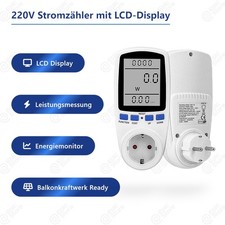
The simplest way is a feed-in meter: a plug adapter with a display that sits between the wall socket and the balcony solar system's plug and counts the energy fed in. It's important that the device explicitly supports the feed-in direction – otherwise simple plug-in energy meters show unreliable values.
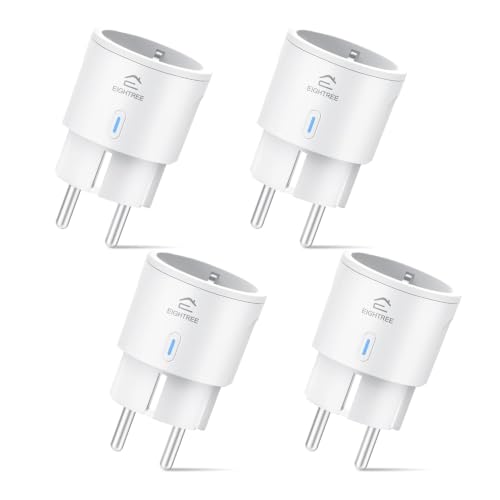
A smart plug with power metering is more convenient. It sends daily curves to the app so you can compare sunny and cloudy days. Not every manufacturer approves its plugs for feed-in measurement; check the information in the datasheet or documentation. The third way is to read your household meter: modern bidirectional meters show consumption and feed-in separately; with an optical reading head, the values can be transferred to your smart home.
Feed-in and yield meters
Ad All products linked with "View offer" are commission (affiliate) links: if you buy through them, we earn a commission – the price stays the same for you. As an Amazon Associate and eBay Partner Network affiliate we earn from qualifying purchases. Learn more
 Ad
AdLeistungsmesser Wattmeter Stromzähler Energiemonitor Balkonkraftwerk …
 Ad
AdSmart WLAN Steckdose mit Strommessung für Balkonkraftwerke
 Ad
AdStrommessgerät Steckdose Zur Einspeisemessung Digital PV-Anlage Mini …
 Ad
AdEnergiekostenmessgerät Einspeisemessgerät Outdoor beleuchtet IP44 schwarz …
What to consider when choosing a meter
An 800 VA inverter feeds in around 3.5 amps at 230 volts – not a high load for a 16 A plug adapter. Even so, the meter on a balcony solar system runs for many hours every day. So only use devices that are suitable for continuous operation and, if the socket is outside, for outdoor use.
- Feed-in measurement explicitly supported (check the product description).
- Protection rating suitable for the location – at least IP44 outdoors.
- Plug directly into the wall socket, no multi-plugs or cascades of extension leads.
- Follow the inverter manufacturer's installation instructions.
- If you're unsure about your existing installation, ask a qualified electrician.
Putting the yield in context: rules of thumb and an example
As a rule of thumb, one kilowatt peak of panel output in Germany generates around 800 to 1,000 kWh per year with good south-facing orientation and a suitable tilt. Panels mounted vertically on a balcony railing, east or west orientation and shading from neighbouring buildings or trees can reduce the yield considerably. Only a small part of the annual yield is produced in the winter half-year.
Worked example with clearly marked assumptions: your panels have 900 Wp, and because of vertical mounting the location only delivers around 650 kWh per kWp per year (assumption). The system then generates about 0.9 × 650 ≈ 585 kWh. If you use 60 per cent of that yourself (assumption), that's around 350 kWh. At an assumed electricity price of 35 cents per kWh, this results in savings of about 350 × 0.35 ≈ 123 euros a year. For your own calculation, always use your measured values and your tariff – the example figures only illustrate the calculation method.
Increasing self-consumption with measured data
Once you know the yield and your household consumption, you can shift usage in a targeted way. If the measurements regularly show surpluses at midday, it's worth moving flexible consumers into those hours: dishwasher, washing machine, batteries for tools, e-bike or laptop. Smart plugs can automatically switch certain devices on when there's enough solar power – provided your system can evaluate the balcony solar system's readings.
Your household's base load – fridge, router, standby devices – is covered particularly reliably by a balcony solar system during the day. That's why it pays to know your base load alongside the yield measurement. Our guide to hunting down power hogs explains how to determine it.
Smart plugs with power metering
Ad All products linked with "View offer" are commission (affiliate) links: if you buy through them, we earn a commission – the price stays the same for you. As an Amazon Associate and eBay Partner Network affiliate we earn from qualifying purchases. Learn more
 Ad
AdShelly Plug M Gen3 Weiß - WLAN & Matter Smarte Steckdose, Leistungsmessung …
 Ad−25%
EIGHTREE WLAN Steckdose, Alexa Zubehör WiFi Steckdose mit Strommessung, 16A …
 Ad−40%
SwitchBot WLAN Steckdose mit Strommessung, Smart Home Steckdose 16A, Mini …
 Ad−15%
EIGHTREE Smart WLAN Steckdose mit Stromverbrauch Messen, 16A, 2er Pack
When a battery comes into play
If measurements over many days show large midday surpluses alongside noticeable evening consumption, a balcony solar battery can increase self-consumption. Whether it pays off depends on the surpluses, the battery price and its lifespan. Clean measurement data is the best basis for exactly this decision. You can compare suitable batteries and balcony solar systems on our sister portals wospeicher.de and wosolar.de.
For the assessment, it helps to record three values in parallel for at least a few weeks – ideally across several seasons: the balcony solar system's yield, the feed-in according to the bidirectional meter and your household's consumption in the evening hours. The feed-in tells you how much energy a battery could absorb at all; the evening consumption tells you how much of it you would actually use later. The smaller of the two figures limits the possible benefit.
Also think about losses: charging and discharging a battery loses some of the energy, and the storage system itself has a certain standby consumption. Sound calculations therefore take into account not only the capacity in kilowatt hours, but also the efficiency, number of cycles and the manufacturer's warranty terms.
Interpreting readings correctly
Many balcony solar owners are initially surprised by the readings. In the morning and evening the panels deliver only little power, and on cloudy days it fluctuates strongly. At midday on clear days the system reaches its maximum, which may be capped by the inverter's 800 VA limit. With oversized panel output, the meter then shows an almost constant power just below this limit for hours – that's intended and not a fault.
In summer, output can drop slightly despite sunshine, because solar cells work less efficiently at high temperatures. In winter, on the other hand, cold, clear days often deliver surprisingly good instantaneous values, but only little energy because of the short days and low sun.
Final safety notes
A balcony solar system is a generator that feeds electricity into your home's circuit. So never plug it into a power strip together with other appliances, and don't use cable reels. Replace damaged cables, plugs or meters immediately. If you're unsure whether the circuit is suitable for feed-in or whether a special feed-in socket would make sense, have the installation checked by a qualified electrician.
FAQ
Do I have to register my balcony solar system with the grid operator?
No. Since Solar Package I, registration in the Federal Network Agency's Marktstammdatenregister is sufficient. A battery is entered there as a separate unit.
Can I measure the yield with a normal plug-in energy meter?
Only if the device explicitly supports feed-in measurement. Otherwise the values are unreliable.
How much yield is normal?
As a rule of thumb, around 800 to 1,000 kWh per kWp per year with good orientation. Vertical mounting, an east-west position and shade reduce the yield.
Is my old meter allowed to run backwards?
A Ferraris meter without a reverse-running lock is tolerated temporarily until the metering point operator replaces it with a bidirectional meter.