



Reklama

Gniazdka z pomiarem
Porównanie: Miernik energii
Z pomiarem energii inteligentne gniazdko staje się detektywem prądu: widzisz pobór, dzienne zużycie i historię bezpośrednio w aplikacji.
TP-Link Tapo Smart WLAN Steckdose P110 mit Energieverbrauchskontrolle …Tapo · Smarte Steckdose · Wi-Fi8,35 € Shelly Plug M Gen3 Weiß - WLAN & Matter Smarte Steckdose, Leistungsmessung …Shelly · Smarte Steckdose · Wi-Fi12,90 €
 SONOFF S60ZBTPF Zigbee Steckdose – Fernsteuerung, Energiemessung …SONOFF · Smarte Steckdose · Zigbee14,90 €
 Tapo P115 Smart WLAN Steckdose mit Energieverbrauchskontrolle …Tapo · Smarte Steckdose · Wi-Fi14,90 €
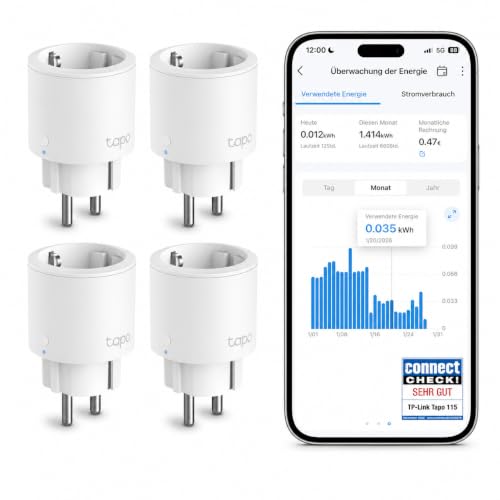 Tapo Nano Smart WLAN Steckdose Tapo P115 mit Energieverbrauchskontrolle …Tapo · Smarte Steckdose · Wi-Fi41,99 €
 Shelly Plug S Gen3 Weiß - WLAN Smarte Steckdose, Leistungsmessung, 12A …Shelly · Smarte Steckdose · Wi-Fi40,13 €
 Tapo P410M WLAN Outdoor Steckdose, Smart Home Plug mit Stromzähler, IP54 …Tapo · Smarte Steckdose · Wi-Fi22,00 €
 Shelly AZ Plug Weiß - WLAN Smarte-Steckdose, Leistungsmessung, 12A, 2500W …Shelly · Smarte Steckdose · Wi-Fi23,90 €
 Shelly Outdoor Plug S Gen3 Dopplepack …Shelly · Smarte Steckdose · Wi-Fi44,25 €
 TP-Link Tapo P110M Matter WLAN Steckdose mit Verbrauchsanzeige …Tapo · Smarte Steckdose · Wi-Fi12,90 €
Amazon (Shelly Europe LTD)Reklama
AmazonReklama
Amazon (Smamoda GmbH)Reklama
AmazonReklama
Amazon (Shelly Europe LTD)Reklama
Amazon (Smamoda GmbH)Reklama
Amazon (Aqara Official DE)Reklama
Amazon (FRITZ!)Reklama
Amazon (Wetterladen - Freizeit- und Sportartikel)Reklama
AmazonReklama
Amazon (Amazon UK)Reklama
Nowe, używane i odnowione – oddzielnie od porównania sklepów, ceny maks. sprzed 6 godzin.
eBay (miyashop24)Reklama
eBay (floydtech)Reklama
Gniazdka z pomiarem
Gniazdka z pomiarem
Gniazdka z pomiarem
A classic plug-in energy meter shows consumption on a small display – so you have to go and read it. A smart plug with energy monitoring, by contrast, sends the values to the app continuously. You see the current power in watts, consumption per day, week or month in kilowatt hours and, in many apps, a cost projection based on your electricity price.
That reveals patterns you would never spot from a single snapshot: how often does the fridge kick in? How much does the gaming PC draw when idle? Does the tumble dryer really only run for two hours? With automations you can also get a notification when the washing machine has finished – its power draw then drops below a threshold.
The metering chips in plug adapters are accurate enough for household use, but they are not calibrated meters. At medium and high loads the readings are usually close to reality. At very low power – such as standby of just a few watts – cheap models scatter more. They are not suitable for billing between parties, for example in a flat share or with subtenants; for that you need a calibrated, MID-compliant sub-meter.
Also check whether the app stores data permanently or only offers a few days of history. If you want to analyse values in Home Assistant, ioBroker or similar systems, choose models with a local interface.
These are the points that most clearly separate the models in practice:
Popular uses include a monitoring plug on the washing machine and dryer to report when a programme ends, on the fridge to check its consumption, behind the entertainment corner to hunt down standby power and on a balcony solar system to track its output. Fan heaters, dehumidifiers or aquariums can be monitored the same way, provided the maximum load fits.
Wystarczająco dokładnie do domu, zwłaszcza przy średnich obciążeniach. Przy bardzo małych wartościach czuwania tanie modele mylą się bardziej. Nie są legalizowane.
Tak. Wiele aplikacji liczy według podanej przez ciebie ceny za kWh. Możesz też sam pomnożyć pokazane zużycie w kWh przez swoją taryfę.
Niektóre modele mierzą też oddawanie i są do tego dopuszczone przez producenta. Sprawdź opis produktu; nie każde urządzenie poprawnie rozpoznaje kierunek przepływu prądu.
Niektóre modele buforują odczyty wewnętrznie, inne tracą wartości z tego okresu. Rzadko jest to w danych technicznych – w razie wątpliwości wybieraj modele z integracją lokalną.