






Reklama

Inteligentne gniazdka
Porównanie: Miernik energii
Inteligentne gniazdko zamienia niemal każde urządzenie w sprzęt smart home: włączanie przez aplikację, sterowanie harmonogramem i często pomiar zużycia.
TP-Link Tapo Smart WLAN Steckdose P110 mit Energieverbrauchskontrolle …Tapo · Smarte Steckdose · Wi-Fi8,35 € Shelly Plug M Gen3 Weiß - WLAN & Matter Smarte Steckdose, Leistungsmessung …Shelly · Smarte Steckdose · Wi-Fi12,90 €
 SONOFF S60ZBTPF Zigbee Steckdose – Fernsteuerung, Energiemessung …SONOFF · Smarte Steckdose · Zigbee14,90 €
 Homematic IP Schalt-Mess-Steckdose | Smart Home, Steckdose misst Strom …Homematic IP · Smarte Steckdose44,95 €Homematic IP Schaltsteckdose | Smart Home …Homematic IP · Smarte Steckdose37,00 €
 Tapo P115 Smart WLAN Steckdose mit Energieverbrauchskontrolle …Tapo · Smarte Steckdose · Wi-Fi14,90 €
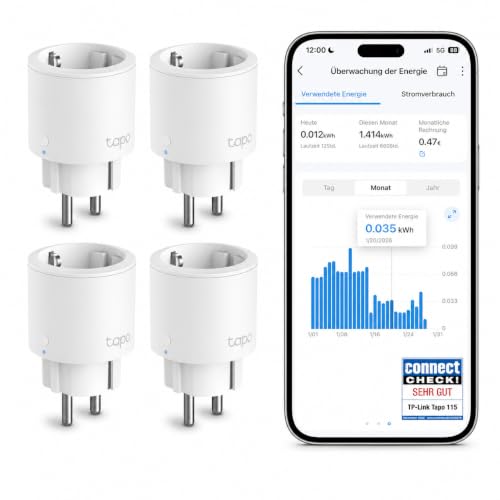 Tapo Nano Smart WLAN Steckdose Tapo P115 mit Energieverbrauchskontrolle …Tapo · Smarte Steckdose · Wi-Fi41,99 €
 Shelly Plug S Gen3 Weiß - WLAN Smarte Steckdose, Leistungsmessung, 12A …Shelly · Smarte Steckdose · Wi-Fi40,13 €
 Hama WLAN Steckdose, mit Matter Smart Home, universal, 3680W …Hama · Smarte Steckdose · Wi-Fi11,22 €
 FRITZ!DECT 210 | smarte Outdoor-Steckdose | Energie messen & sparen …FRITZ! · Smarte Steckdose · DECT34,99 €
Amazon (Shelly Europe LTD)Reklama
AmazonReklama
AmazonReklama
AmazonReklama
Amazon (Smamoda GmbH)Reklama
AmazonReklama
Amazon (FRITZ!)Reklama
MediaMarktReklama
Amazon (FRITZ!)Reklama
MediaMarktReklama
MediaMarktReklama
MediaMarktReklama
MediaMarktReklama
Amazon (Shelly Europe LTD)Reklama
Amazon (Voltking-de)Reklama
Amazon (Smamoda GmbH)Reklama
MediaMarktReklama
Amazon (Aqara Official DE)Reklama
Amazon (Wetterladen - Freizeit- und Sportartikel)Reklama
Amazon (FRITZ!)Reklama
Wyświetlono 24 z Modele: 26. Przeglądaj wszystkie Mierniki energii z filtrami →
Nowe, używane i odnowione – oddzielnie od porównania sklepów, ceny maks. sprzed 6 godzin.
eBay (fritz-eu)Reklama
eBay (miyashop24)Reklama
eBay (floydtech)Reklama
eBay (elv-elektronik)Reklama
Inteligentne gniazdka
Inteligentne gniazdka
Inteligentne gniazdka
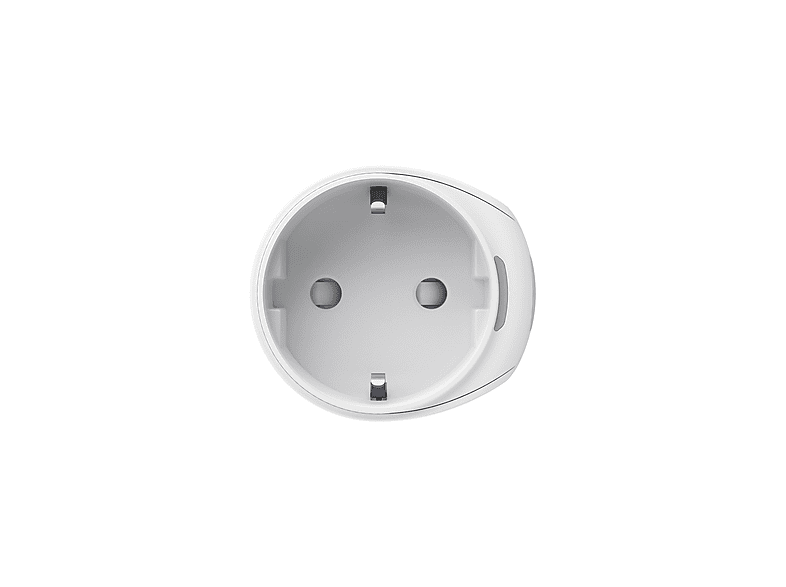
A smart plug is a plug-in adapter with a built-in relay and wireless module. You plug it into the wall socket, plug your appliance into the adapter – done. From then on you can switch the power on and off via app, voice assistant, schedule or automation. That works well for floor lamps, fans, coffee machines with a mechanical switch, Christmas lights or home entertainment gear that you want fully disconnected at night.
Important: the plug only switches the power supply. Appliances that need an extra button press after power-on (many TVs, washing machines, bean-to-cup coffee machines with soft-touch controls) won't start automatically. For fridges, freezers, aquariums or medical devices, accidental switch-off is risky – there you should measure at most, not switch via automation.
Wi-Fi plugs connect directly to your router and don't need a hub. That's the easiest way to get started, but with many devices it puts load on your home network; almost all models only use the 2.4 GHz band. Zigbee plugs need a gateway (such as a bridge or smart home hub), but in return they form a stable mesh network and are energy-efficient. DECT plugs are mainly interesting for households with a FRITZ!Box, which acts as the hub.
Matter is a cross-brand standard: a Matter device can be paired with Apple Home, Google Home, Amazon Alexa or SmartThings, provided you have a suitable Matter controller at home. If you don't want to commit to one system yet, Matter is the most future-proof choice.
Check the load rating first. Many models are designed for up to 16 A or 3,680 W, while compact mini plugs are sometimes rated for only 10 A. For fan heaters, kettles or washing machines you need the higher continuous rating. Also check the form factor: slim models don't block the neighbouring socket on a power strip.
Simple Wi-Fi plugs without monitoring are among the cheapest smart home devices of all; models with energy monitoring, Matter or a local interface cost a bit more. With multipacks, always work out the price per unit and check that the pack really contains identical models. Our price comparison shows offers from several shops, so you can compare single units and packs side by side.
Nie. Gniazdka Wi-Fi łączą się bezpośrednio z routerem i konfiguruje się je w aplikacji producenta. Modele Zigbee potrzebują natomiast bramki, a DECT – zgodnej stacji bazowej, np. FRITZ!Box.
Tak, moduł radiowy stale pobiera trochę prądu, zwykle ok. jednego wata lub mniej. Gdy wyłącza urządzenia w trybie czuwania, zwykle oszczędza więcej, niż zużywa.
Tylko jeśli jest wyraźnie przeznaczone na zewnątrz (co najmniej IP44). Zwykłe gniazdka wewnętrzne nie są chronione przed bryzgami.
To zależy od modelu. Urządzenia Zigbee, DECT i Matter oraz niektóre Wi-Fi działają lokalnie. Gniazdka Wi-Fi oparte wyłącznie na chmurze bez internetu często można przełączać tylko przyciskiem na obudowie.